Combining biological agriculture, soil and water governance, and byproduct valorization is paving the way to build an ESG-aligned cocoa value chain, improving efficiency and enhancing product value.
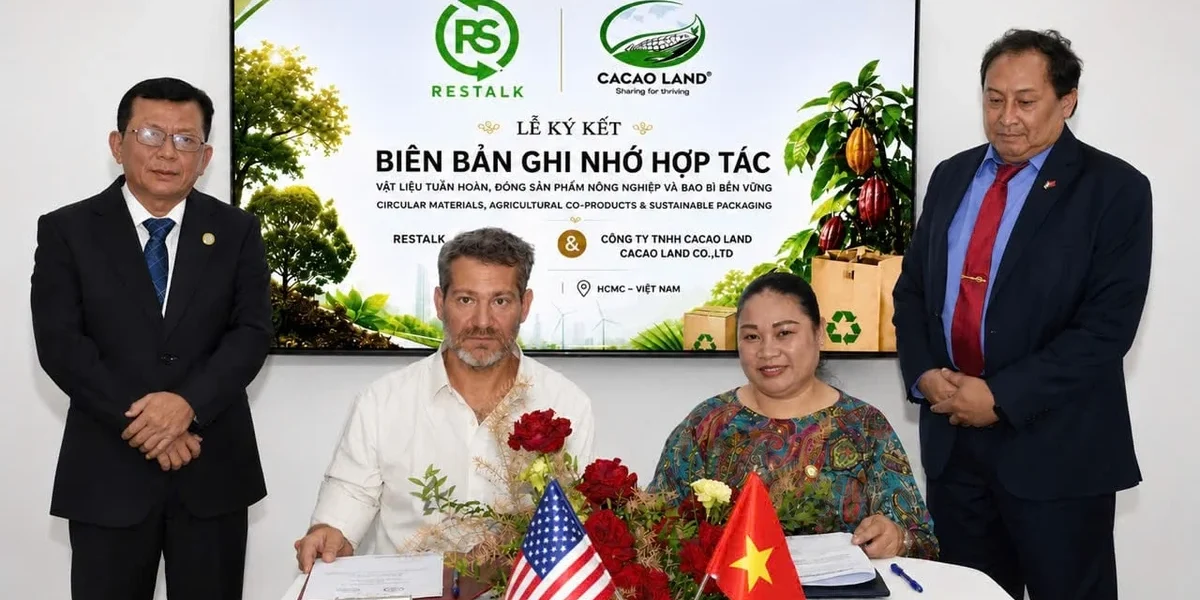
Within the framework of the recent “International Forum and Exhibition on Innovation and Sustainable Development” held in Ho Chi Minh City, Cacao Land Co., Ltd. signed two Memoranda of Understanding (MOUs) with Aqua Aid Europe B.V. (the Netherlands) and ReStalk Global Holdings Pte. Ltd. (USA).
The two agreements target two vital links in the cocoa supply chain. One focuses on managing soil, water, nutrients, and plant health right from the raw material zone; the other expands into recovering and repurposing byproducts and developing bio-based agricultural materials.
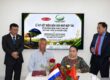
 Cacao Land Co., Ltd. signs a Memorandum of Understanding (MOU) with ReStalk Global Holdings Pte. Ltd. (USA). Photo: Cacao Land.
If implemented synchronously, these can become crucial components in the orientation toward building a circular cocoa ecosystem aligned with ESG and the investment preparation process for the Cocoa and Chocolate Complex Project in Dak Lak.
Resource Governance and Value Addition from Byproducts
In sustainable agricultural production, environmental performance is not determined solely at the processing stage. Soil health, water retention capacity, nutrient absorption efficiency, crop resilience, and the utilization of input factors all impact the quality and sustainability of the entire value chain.
According to the MOU on “Biological Agricultural Solutions for Sustainable Cocoa Development,” Cacao Land and Aqua Aid Europe B.V. established a collaborative framework to research, test, evaluate, and gradually apply biological agricultural solutions across cocoa raw material regions in Vietnam.
The planned activities focus on improving soil structure, moisture, and health; supporting root system development; applying biological solutions to enhance plant health; increasing water and nutrient efficiency; and bolstering cocoa trees’ adaptability to adverse conditions.
Notably, the cooperation targets trackable and evaluable outcomes such as soil and root zone health, water use efficiency, nutrient absorption capacity, plant health, resilience, and farming productivity.
This serves as a vital foundation for approaching ESG in agriculture. Green production goes beyond commitments; it increasingly demands that enterprises provide data verifying resource utilization rates, production efficiency, and the positive impacts generated throughout cultivation.
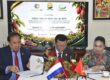
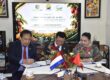
 Cacao Land Co., Ltd. signs an MOU with Aqua Aid Europe B.V. (the Netherlands) on “Circular Materials, Agricultural Co-products, and Sustainable Packaging.” Photo: Cacao Land.
While the collaboration with Aqua Aid focuses on the upstream stages of the chain, the MOU between Cacao Land and ReStalk Global Holdings expands to another core aspect of the circular economy: ensuring agricultural byproducts do not become waste, but are channeled into a new value cycle.
Under the cooperation framework on “Circular Materials, Agricultural Co-products, and Sustainable Packaging,” both parties plan to research and develop an integrated circular cocoa value chain in Vietnam.
Cocoa alongside suitable agricultural byproducts and co-products will be evaluated for collection, sorting, and transformation into fiber materials, molded products, or sustainable packaging solutions.
A key step involves identifying feedstock streams available from production regions and the project ecosystem. Factors including collection feasibility, seasonality, feedstock quality, traceability, and technical requirements will be assessed prior to selecting development directions.
For feedstocks meeting standards, the parties may further explore developments into molded trays, boxes, protective cushioning inserts, packaging materials, or packaging components serving the cocoa, chocolate, and processed goods industries.
This approach aligns with the core principle of the circular economy: byproducts from one stage become input materials for another, thereby minimizing waste and creating additional economic value.
Organizing a Circular Cocoa Chain, Building ESG Data
Stemming from these two collaborative tracks, the cocoa chain can be viewed within a broader structure rather than operating solely under the traditional “planting – harvesting – processing – consumption” model.
Under circular thinking, the chain can be structured from sustainable raw material zones and biological agriculture to soil, water, and nutrient management, processing… culminating in ESG data.
Within this structure, resource efficiency and value recovery are factored in right from the design phase of the value chain.
 If implemented synchronously, these can become crucial components in the orientation toward building a circular cocoa ecosystem aligned with ESG. Photo: Cacao Land.
This is also the intersection between the circular economy and ESG. While the circular economy provides technical solutions and organizational models to minimize resource waste, ESG establishes the governance framework, data, and measurement systems for enterprises to monitor, evaluate, and disclose environmental, social, and governance outcomes.
One of the major challenges for ESG in agriculture is converting practical production activities into a traceable and verifiable data system.
As cooperation programs unfold, data on soil, water, nutrition, crop health, byproduct volume, collection rates, traceability, or reused material quantities can serve as the foundation to progressively construct an ESG dataset for the cocoa chain.
This becomes increasingly meaningful as markets, commercial partners, banks, investment funds, and financial institutions focus more heavily on the ability to demonstrate tangible impact rather than relying merely on sustainability commitments.
Cacao Land’s international partnerships take place in the context of its collaboration with LPF Fund and Golden Gate BCE during the investment preparation phase of the Cocoa and Chocolate Complex Project in Dak Lak, linked with relevant components of the Vietnam cocoa industry logistics initiative proposed by LPF Fund.
Under current orientations, the complex is studied not merely as a cocoa and chocolate processing facility, but situated within an integrated nexus connecting raw material zones, preliminary processing, deep processing, logistics, trade, technology, circular economy, ESG, and capital resources.
Cacao Land focuses on developing raw material zones, project components, and organizing the cocoa value chain. Golden Gate BCE coordinates and connects activities across the collaborative ecosystem. LPF Fund focuses on project standardization, co-structuring financial mechanisms and suitable capital reception and management frameworks in Vietnam, while contributing to ESG-related aspects, capital governance, and impact reporting.
 Cacao Land Co., Ltd. provides technical guidance on planting and caring for cocoa trees to farmers. Photo: Cacao Land.
In this approach, biological agricultural technologies and circular materials are not viewed as isolated initiatives, but as technical components serving the standardization of the entire cocoa value chain.
A gap that many sustainable agricultural projects must overcome is how to transform an effective production model into a project qualified to meet green capital requirements.
Banks, investment funds, and financial institutions assess not only financial viability, but also examine legal structures, governance, environmental and social risks, data systems, and impact measurability.
Therefore, establishing sustainable raw material zones, efficiently utilizing soil, water, and nutrients, implementing traceability, valorizing byproducts, and developing circular materials can create tangible components enabling the project to progressively complete its ESG system.
Within the cooperation mechanism under development, LPF Fund serves as the lead focal point in Vietnam for project standardization and coordinating the formulation of appropriate capital reception and management structures within its legal purview; it also collaborates on project documentation, financial structuring, capital flow governance, ESG, and impact reporting.
Specific capital transactions, if executed, must still undergo due diligence, investment approval, fulfillment of conditions precedent, and formal execution through definitive financial instruments.
From the soil and root systems of cocoa trees to post-harvest byproducts, from deep processing to packaging materials, every link can become part of the transition toward circularity.
If pilot and cooperation programs continue to demonstrate tangible efficacy, the Dak Lak model can contribute valuable experience to the broader challenge of the agricultural sector: shifting from isolated green production models toward organizing a circular value chain equipped with ESG data and capable of connecting with markets and green finance sources.
When that happens, the value of the cocoa crop will be measured not merely by bean yield or finished chocolate output, but reflected through resource efficiency, the ability to regenerate value from byproducts, and measurable environmental and social impacts throughout the entire value chain.
Phương Chi
Source: nongnghiepmoitruong.vn