(Thanh tra) – Within the framework of the “International Forum and Exhibition on Innovation and Sustainable Development” held in Ho Chi Minh City on August 19-20, 2026, Cacao Land Co., Ltd. signed two Memoranda of Understanding (MOUs) with Aqua Aid Europe B.V. (the Netherlands) and ReStalk Global Holdings Pte. Ltd. (USA), aiming toward developing sustainable raw material areas, biological agriculture, circular economy, and sustainable packaging.
The two agreements are expected to provide additional technical solutions to the cocoa value chain that Cacao Land is researching and developing in Vietnam, while aligning with the investment preparation process for the Cocoa – Chocolate Complex Project in Dak Lak.
Focusing on Developing Sustainable Raw Material Areas
According to the MOU with Aqua Aid Europe B.V., both sides agreed to establish a cooperation framework to research, test, evaluate, and progressively apply biological agricultural solutions to raw material area development and cocoa production in Vietnam.
The core focus of the cooperation is researching solutions capable of improving soil and root zone health, increasing water and nutrient use efficiency, and enhancing plant health and the adaptability of cocoa trees to adverse conditions.
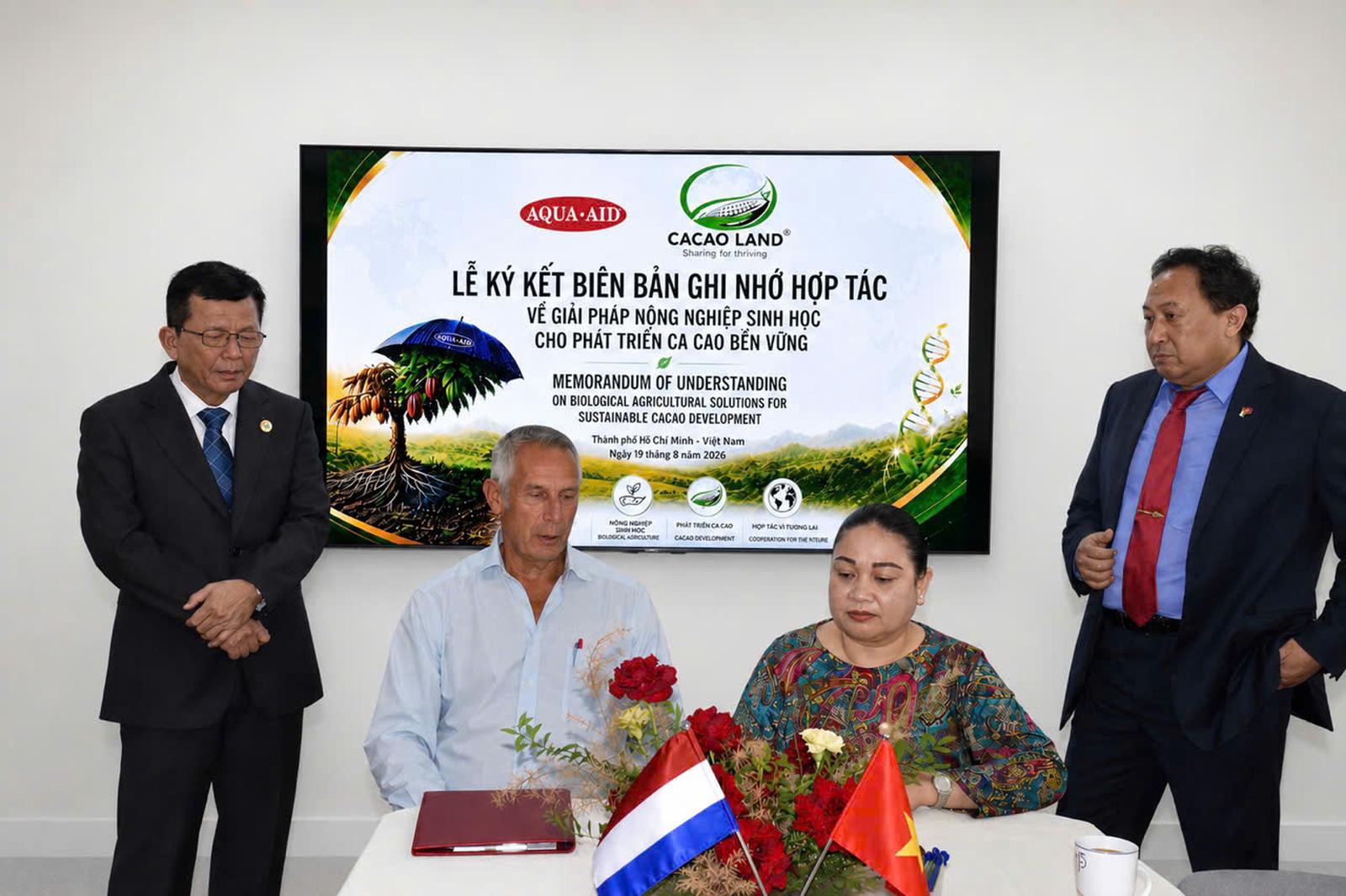
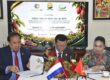
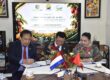
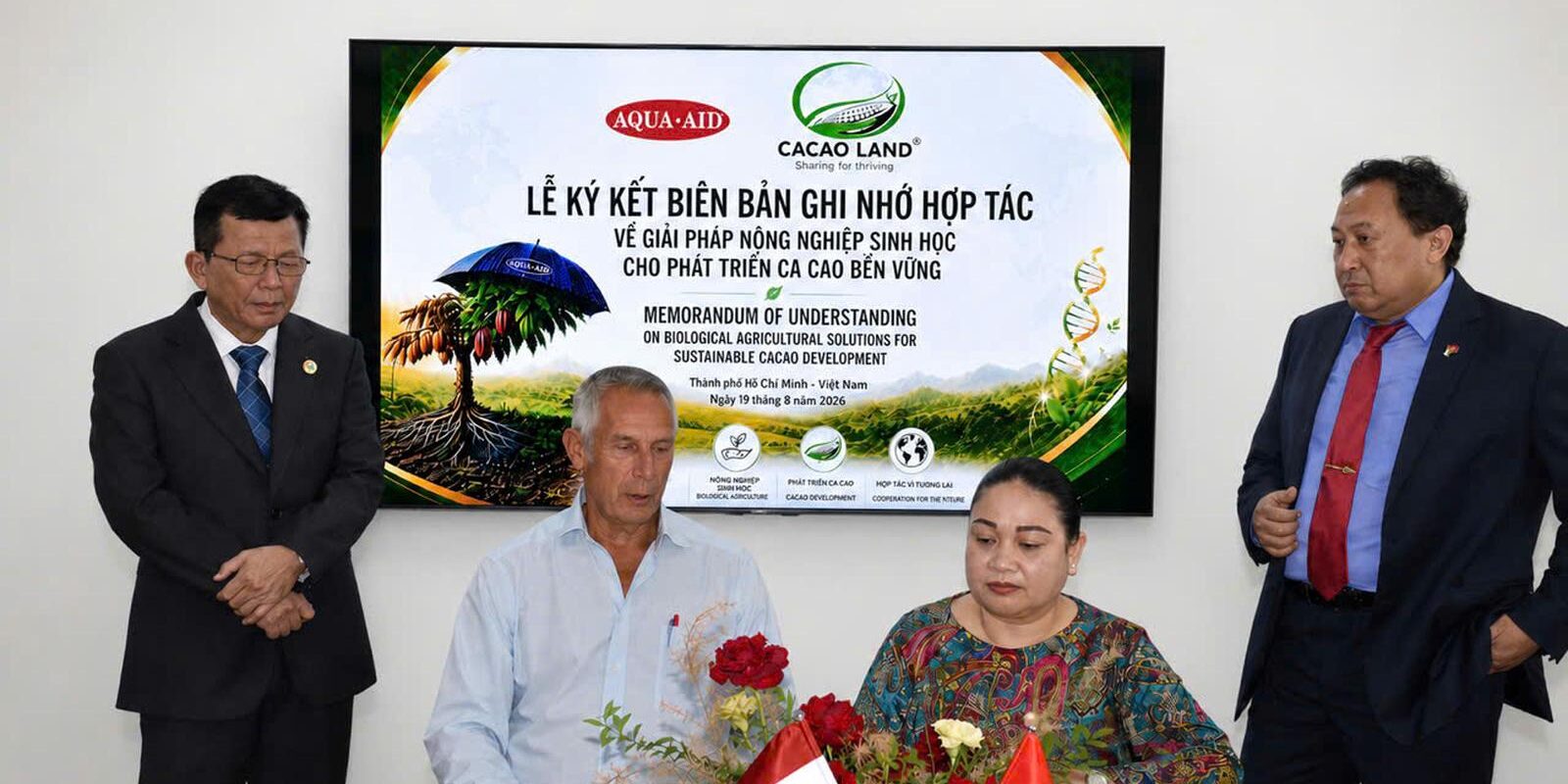
Representatives of Cacao Land and Aqua Aid Europe B.V. at the signing ceremony of the Memorandum of Understanding.
Solutions planned for research include improving soil structure, moisture, and health; supporting root system development; utilizing biostimulants; optimizing water use efficiency and moisture distribution in the root zone; and studying technical solutions suited to cocoa cultivation conditions in Vietnam.
According to the cooperative orientation, solutions will first be tested and evaluated for practical effectiveness. Based on the achieved results, both parties will consider the potential to expand technical and commercial cooperation to larger-scale cultivation areas.
Placing emphasis on soil, water, nutrients, and crop health is also a crucial component in working toward establishing a cocoa raw material area in line with environmental and sustainable development criteria.
Valorizing Byproducts, Heading Toward a Circular Value Chain
While the MOU with Aqua Aid Europe focuses on the upstream segment of the chain, the agreement between Cacao Land and ReStalk Global Holdings Pte. Ltd. expands into the circular economy and value addition from agricultural byproducts.
According to the MOU on “Circular Materials, Agricultural Co-products, and Sustainable Packaging,” both parties plan to research and develop an integrated circular cocoa value chain in Vietnam. Under this, cocoa and suitable agricultural byproducts and co-products will be collected, evaluated, and researched for potential transformation into fiber materials, molded products, and sustainable packaging solutions.
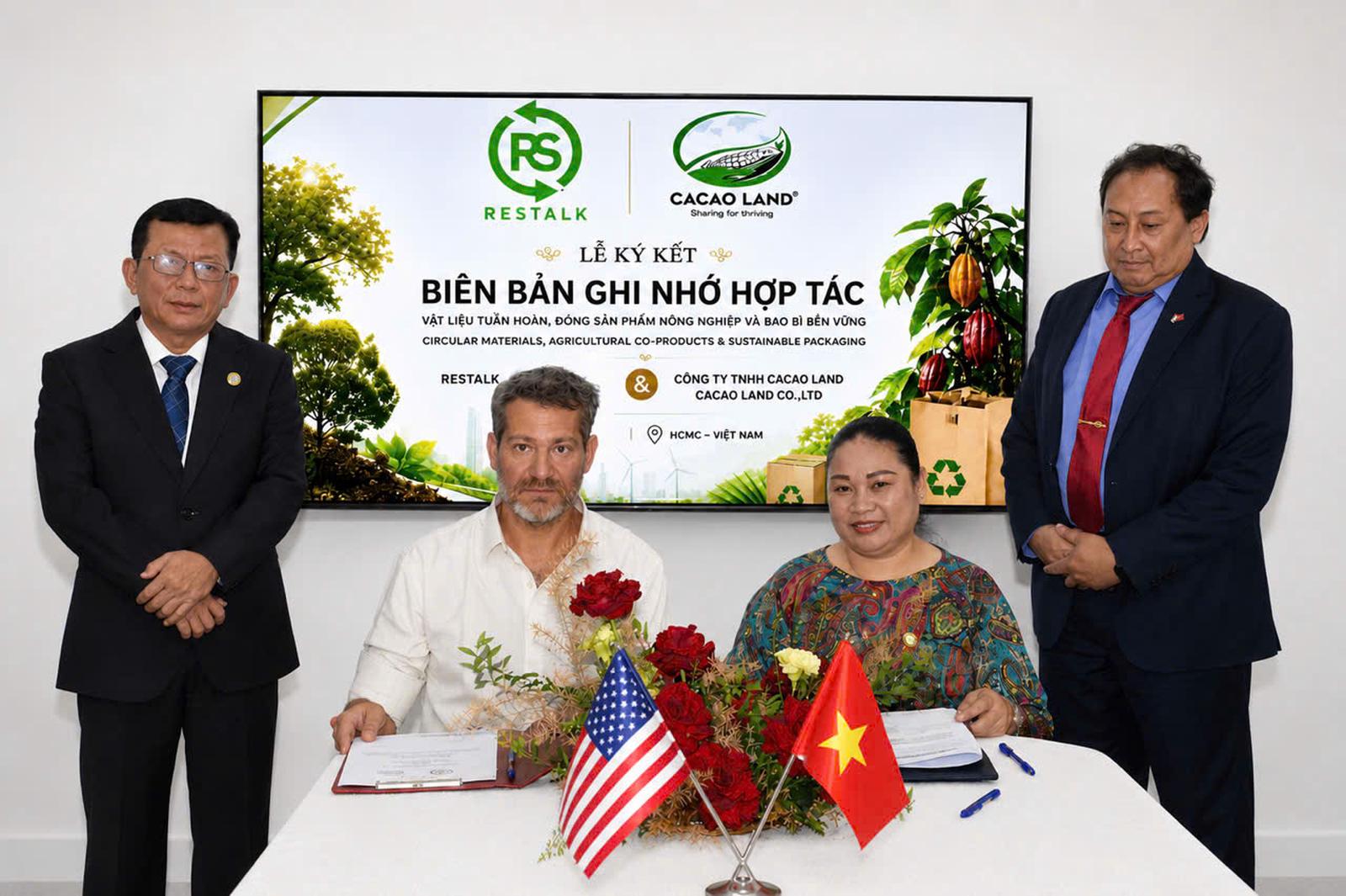
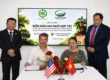
Representatives of Cacao Land and ReStalk Global Holdings Pte. Ltd. sign the Memorandum of Understanding.
Cacao Land plans to contribute its insights into Vietnam’s cocoa industry, agricultural networks, potential co-product sources, and packaging application demands. ReStalk will contribute experience in converting agricultural byproducts and co-products into fiber materials and molded products.
Both parties also plan to identify and map suitable feedstock streams from the raw material areas and the project ecosystem, while assessing collection feasibility, seasonality, quality, traceability, and technical requirements.
For feedstock streams meeting requirements, the parties will continue researching procurement mechanisms and the potential to develop fiber materials, molded products, or packaging used for cocoa, chocolate, and related processed goods.
Application directions mentioned include molded trays, boxes, protective cushioning inserts, packaging materials, and several other packaging components.
However, commercial terms such as purchase prices, minimum output, or supply obligations are not established in the MOU and will only arise when the parties execute separate commercial contracts or addenda.
Complementing Links in the ESG Cocoa Value Chain
The common denominator of both agreements is working toward expanding the cocoa value chain sustainably, but through two distinct sets of solutions.
Upstream, the cooperation with Aqua Aid focuses on soil, water, nutrients, root systems, and cocoa tree health. Post-production, the partnership with ReStalk targets byproduct valorization, circular material development, and sustainable packaging.
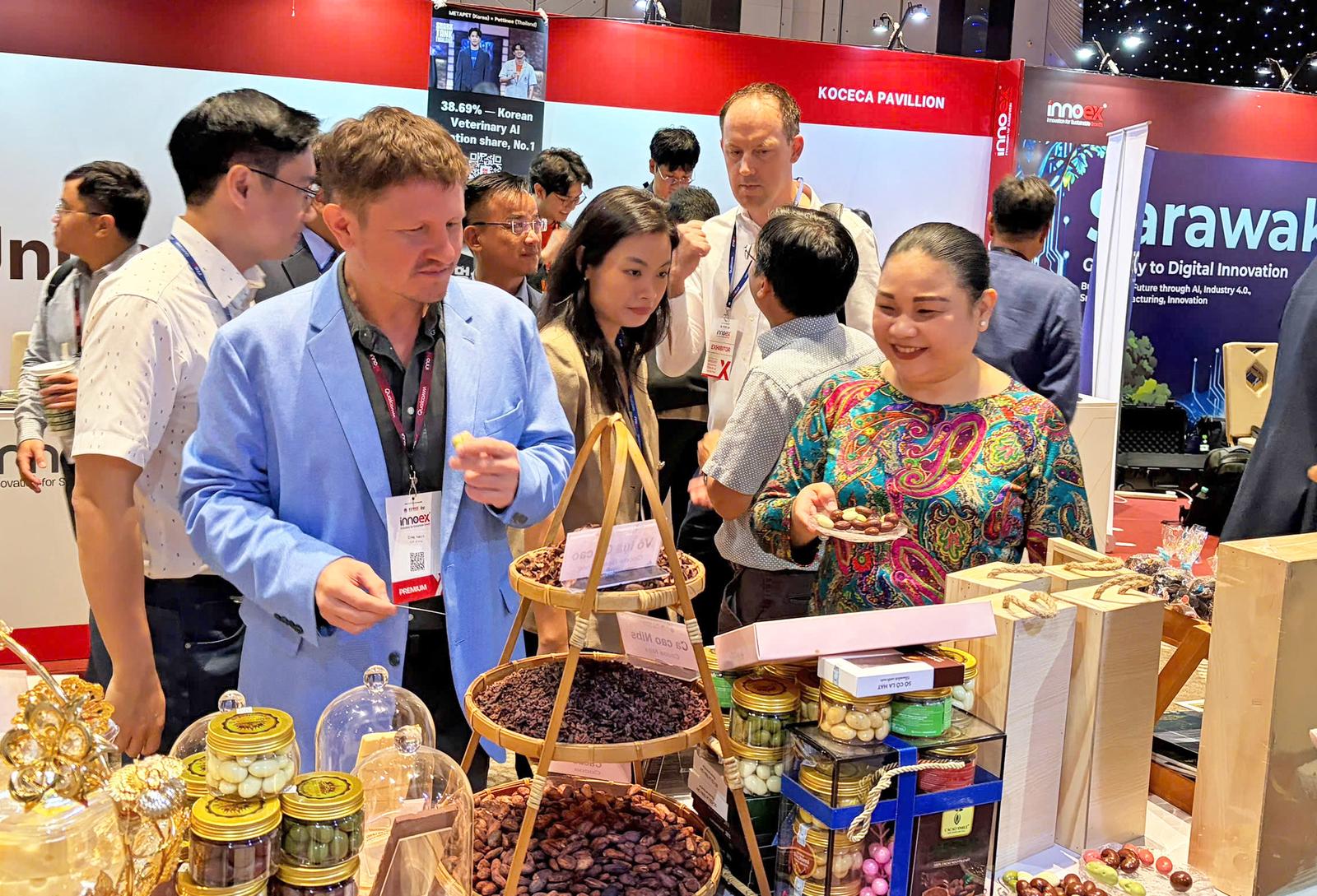
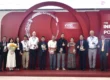
Cacao Land’s booth at the “International Forum & Exhibition on Innovation & Sustainable Development” held in Ho Chi Minh City on August 19-20, 2026.
If effectively implemented, these components can be linked with the development of raw material areas, traceability, preliminary processing, deep processing, logistics, trade, and ESG data management.
According to Cacao Land’s orientation, the value chain is being studied toward an integrated linkage: sustainable raw material areas – biological agriculture – traceability and data – deep processing – byproduct valorization – circular materials – sustainable packaging – logistics – markets.
This approach demonstrates that the enterprise is researching the incorporation of environmental and sustainable development criteria into multiple stages of the chain, rather than focusing solely on production or the final processing phase.
Aligning with the Preparation for the Cocoa – Chocolate Complex Project
These international agreements were signed in the context of Cacao Land collaborating with LPF FUND and Golden Gate BCE during the investment preparation process for the Cocoa – Chocolate Complex Project in Dak Lak.
Under the introduced cooperation framework, Cacao Land focuses on project components, developing raw material zones, and organizing the cocoa value chain. Golden Gate BCE coordinates and connects activities across the collaborative ecosystem. Meanwhile, LPF FUND focuses on project standardization, coordinating the development of financial structures, appropriate capital reception and management mechanisms, alongside ESG-related matters and impact reporting.
In this direction, the Dak Lak project is explored not only as a chocolate processing facility, but situated in conjunction with raw material zones, preliminary processing, deep processing, logistics, trade, technology, and circular economy.
The two newly signed MOUs with Aqua Aid Europe and ReStalk can therefore be viewed as complementary technical steps in researching and standardizing the project ecosystem. One focuses on the sustainability of raw material zones, while the other expands the potential for byproduct valorization and the development of circular materials and packaging.
Quốc Huỳnh
Source: thanhtra.com.vn